Friday, September 21, 2018

Netgalley Partner: Suffering Gospel Hope When Life Doesn't Make Sense


This is a great book. Suffering is something we all face. The author is in the throes of his own suffering beyond his wildest expectations. He shares his story as well as the stories of others whom he has counseled. 

But most importantly he shares a theology of suffering in light of the gospel of Jesus Christ. Life with a helper, an advocate who is ever present and in control. 

It’s written in a way that the average person can grasp the suggestions, thoughts, concepts, and applications. I love the italics questions throughout steps to ponder and heart scripture to consider with the themes of each chapter, as well as the reflection questions for individual or group review. 

An example of the end of a chapter- one question and a heart reset:
When you pray that your hope would be “rooted in the fact that your Lord is in you, he is with you, and he is for you right here, right now” (p. X), how can you look differently at suffering? Heart Reset • Psalm 13:1–6; 27:1–14 • Isaiah 43:1 2

As one in the midst of unique suffering, being pointed back to dependence on a great and worthy God, and having all my wrong thinking and self indulgence systematically approached, it’s a hard, humbling, way to relatable read, but one that will resonate and be revisited over and over. 

I always finds the author's words help me know if a book is for me or not- here are some quotes....

Intro-- talking about suffering:

It was a surprise visit by an unwelcome visitor, like it is for so many sufferers. I didn’t know that day that Mr. Hardship would knock on my door, barge his way in, and take residence in the most intimate rooms of my life. And I didn’t have any idea how his presence would fundamentally change so many thing for the long run.

I didn’t think it would happen to me. Embarrassment washed over me as I thought of the silly platitudes and empty answers I had casually given people when they’d been caught in the confusing drama I was now in.

Because I did not have the power or control to make Mr. Hardship leave, I ran to the place where I have always found wisdom, hope, and rest of heart. I ran to the gospel of Jesus Christ, and in so doing, into the arms of my Savior. As I dove into the narrative of the gospel,which is the core message of God’s Word, I realized something profoundly important and wonderfully comforting: I wasn’t unprepared after all.

But I believe that God is good, and I did everything I could to run toward his goodness and not away from it.

Suffering has the power to expose what you have been trusting all along. If you lose your hope when your physical body fails, maybe your hope wasn’t really in your Savior after all. It was humbling to confess that what I thought was faith was actually self-reliance.

Suffering is never abstract, theoretical, or impersonal. Suffering is real, tangible, personal, and specific. The Bible never presents suffering as an idea or a concept but puts it before us in the blood-and-guts drama of real human experiences. When it comes to suffering, Scripture is never avoidant or cosmetic in its approach. The Bible never minimizes the harsh experiences of life in this terribly broken world, and in so doing, the Bible forces us out of our denial and toward humble honesty. In fact, the Bible is so honest about suffering that it recounts stories that are so weird and dark that if they were a Netflix video you probably wouldn’t watch it.

Trials reveal your true thoughts and desires, where you have been looking for life, where you have sought meaning, and where you have looked to give you hope. Suffering will always expose the true nature of your relationship to and communion with God. I won’t say much here, because a later chapter is dedicated to this topic, but your suffering will be all the more painful if you question the presence, promises, goodness, or faithfulness of God.

How are trust and identity connected? What have you put your trust in other than God? 2. Paul writes, “We should fear our delusion of strength” (p. X). Considering the chapter as a whole, what does this mean? 3. “Scripture works to prepare us, not so we would live in fear, but so we will be ready for the things we will all face” (p. X). Identify some passages or biblical stories to cling to in moments of suffering. 4. Have you questioned God regarding your suffering because you’ve thought it was punishment? What Scripture verses refute this belief? 5. Consider the things that can be brought to your suffering (poor theology, doubt of God, unrealistic expectations of life and of others, pride, materialism, and selfism). Pray that the Lord would expose your weakness and dependency and show you his care. Heart Reset • Romans 8:1–4 • 2Corinthians 12:9 • James 1:2–4 3

Thankful to read a netgalley copy.

Tuesday, September 18, 2018

The Biggest Lie About Surrender – and Why You Can’t Afford to Believe It

I'm blessed to get to know a few authors as I love to launch books, the avid reader that I am.  This author, Jennifer Dukes Lee, feels so much like a kindred spirit, who knows the voices and longings in my head, and is pulling me back to my Great God- rather than seeking empathy, control, validation, I should be seeking the Good News of Jesus Christ and a deeper more intimate relationship with God.  The struggle is real in cultivating the unseen, often hidden, relationship in my heart, but if I want others to see me as a follower of Christ who speaks truth to others, I must first create that mindset and solution set to my ultimate Father and guide- Yaweh, Elohim, I am,.... the Word.   

Enjoy a snippet of her mentoring my heart through her book, It's All Under Control releasing to the world today!  

 If you asked me five years ago, I naively would have told you that I didn’t struggle with control. I mean, seriously— as long as everything went exactly the way I hoped, I was totally flexible.

It’s not that I wanted to control other people. Mostly, I wanted to control myself. If I ever had high expectations of anyone, it was of me. I wanted to present the self-assured, together version of my whole being. Which means I craved control over my face, my emotions, my body, my food, my words, my house, my schedule, my yard, my future.

My preference was a tidy, predictable, safe life where no one got hurt, where my kids remained in one piece, where there was no pain for anyone ever again, amen.

I said I trusted God but had reached the point where I realized I actually didn’t.
As a Jesus girl, this shocked me.


Clearly, my old systems of coping weren’t working: My desire to obsessively orchestrate my whole life was burning me out.

As a mom, I heard myself snapping at my kids. As a ministry leader, I knew that I was functioning within my call, but I didn’t feel fulfilled. I was tired, even after a regular night’s sleep. And I found myself zoning out during conversations with my husband, because I was mentally making lists of everything I needed to get done.

In short, I ran out of gas.

Maybe the empty tank was God’s way of bringing me to a dead stop, so I would finally pay attention. It worked. God got my attention, and maybe he’s trying to get yours too.

Imagine that it’s you who’s run out of gas. Maybe that doesn’t take much imagining after all, because like me, you’re tired of trying to hold it together. You want to keep it all under control, but things aren’t working out the way you planned.

When you and I began to follow Jesus, we relinquished control over our lives. But because we suffer from the chronic condition known as being human we constantly try to steal that control back.

My wake-up call happened when I realized that the battle for my heart was regularly being fought inside the tiny squares of my to-do list.

I began to ask myself this question: “What are the things that, if they were taken away, would shatter the identity I have created?”

Was it my work? My calendar? My efforts to shield my children from pain and suffering? This urge to always say yes?

For me, the answer was: “All of the above.” I was trying to be the CEO of everything.

Jesus delivered a sobering reminder: You will never know if you can trust Me if you don’t give Me the chance to prove it.

I recommitted myself to a life surrendered to Jesus’ plans for my life. But something felt … off … when I considered what surrender truly meant.

I accidentally bought into a weird idea that surrendered living meant mostly that I needed to “do less.” Yet that was unrealistic because so much of life clearly couldn’t be opted out of. People depended on me. I had kids to feed. A house to manage. Books to write.

Most people can’t simply fire their lives and move on when it gets too chaotic. We can’t stop managing a household, cancel all our appointments, and spend the rest of our days on a floatie in the middle of a lake.

Here’s what I began to learn: Surrendered living is much more than “doing less.” It’s being more of who God created us to be.

Yes, I totally need more chill in my life, and maybe you do too. But here’s the full truth about surrender:

Surrender doesn’t come with some unrealistic demand that you are suddenly going to stop being the incredibly brave and brilliant woman that you are. Real surrender appreciates God’s remarkable design in you.

Do you know what a wonder you are?

You don’t settle. You are the sort of woman we can count on to meet a work deadline, organize a food drive, take in the neighbors’ kids during an emergency, drive your coworker to chemo, counsel a friend at 3 a.m. by text message, keep track of everyone’s appointments, and make sure we’re all wearing seat belts before you drive us on the three-day adventure that you single-handedly arranged.

We need you. We need take-charge, charitable women like you as doctors and nurses in operating rooms where details like “proper disinfectant” matter. Let me tell it to you straight: If you have an inner control freak, I’m hoping you’ll let her bust loose like nobody’s business if someone I love is on your operating table. We need responsible women like you to control all the bleeding.

We also need you in charge of schools, nonprofits, and Fortune 500 companies. We need rock-star women like you to show us that surrender isn’t “lie down in a pile.” It’s “march forward like a warrior.” Sometimes surrendering to God will require you to do the hardest work you’ve ever done in your life: take in another foster child, fight for your marriage, kick cancer where the sun don’t shine, or refuse to capitulate to the persistent drubbing from Satan.

Girl, listen up. We count on you. You are a woman fervently devoted to God’s calling on your life, not only in your work but also in your relationships.
Of course, as Carrie Underwood will sing to you, Jesus is definitely taking the wheel. But make no mistake: There are times when he’s going to ask you to do some driving.

Don’t think of Jesus as your chauffeur; he is more like your driver’s ed coach. He’s there to teach you His rules of the road. Friend, do not fear the wheel. You have been equipped to drive—and Jesus is beside you when you steer the wrong way. Hopefully He will pull the emergency brake if necessary, and I’ve personally put in a request for roads lined with padded walls.
 The windows are rolled down, the music is cranked, the tank is full, and there’s something that looks like freedom on the horizon.
Out on the open road, may you feel the reassuring love of Jesus. On this journey toward surrender, you’ll discover that, at last, it really is all under control: God’s.


BIO: Jennifer Dukes Lee is the wife of an Iowa farmer, mom to two girls, and an author. She loves queso and singing too loudly to songs with great harmony. Once upon a time, she didn’t believe in Jesus. Now, He’s her CEO. Jennifer’s newest book, It’s All Under Control, and a companion Bible study, are releasing today! This is a book for every woman who is hanging on tight and trying to get each day right―yet finding that life often feels out of control and chaotic.

Adapted from It’s All under Control: A Journey of Letting Go, Hanging On, and Finding a Peace You Almost Forgot Was Possible by Jennifer Dukes Lee, releasing this fall from Tyndale House Publishers.

Monday, September 17, 2018

Book Revew: Grafted In


 Do you struggle with being able to feel the Father’s love for you? Are you tired of trying to shake that restless feeling and nagging loneliness you’ve been carrying all your life? 

You don’t have to go it alone anymore.

You’ve been adopted.


In Grafted In, Michelle Wuesthoff is your guide to knowing how to lead your orphan heart to the Spirit of Adoption, step by step. In the midst of the ups and downs of parenting her adopted children, the Lord began to show her how she was functioning just like an orphan herself when it came to her relationship with him. And just like with her children, there was a process she could learn to bond with him, to love him, and to receive his love in return.

Michelle shows you how to rebuild the foundation of your identity the right way—on God’s reckless, lavish love and on his truth. Then, she outlines specific steps for you to follow to be able to receive and embrace your own adoption. Through personal stories from her experiences as an adoptive mother and short-term missionary to Uganda, she teaches you, encourages you, and walks with you on your own journey home to the Father.
 

Below are some key quotes that I had to share- and my notes copied out after I finished reading- of the strategies and ways Michelle shares to remember that you are His, and live like it.  Releasing September 18th.... Another great book- that I'm seeing the Lord remind me- He is mine- He is in control- He loves me and wants only the best for me... I just need to look to Him. 


Thursday, September 13, 2018

Tyndale Partner Book Review: It's All Under Control by Jennifer Dukes Lee

Loving this new book. The life lesson I’ve learned in the last decade truly is that God is in control. In all the things, people, places, worries, unknown of all my life. But soul amnesia still strikes so easily. So reminders are good as I ask is my God big enough for __? Yes He is.


This book has made me laugh, hold back tears, and reach back to read it over and over. The authors own struggle to allow God to be in control of her life is humorous, vulnerable, brings authentic advice, and keeps it real that knowing and living it out are two different things.

Quotes truly reflect a book better than my words... here are some favorites as graphics....


This one I find especially needed as a reminder to my heart and mind!

Even if being still is hard- God wants that intimate relationship with us.   He loves us and wants us to surrender and depend on Him. 


Here's my attempt at a book selfie- with a puppy who wanted to remind me- it's all under control- but that control is not mine-- it's Gods!!  


Wednesday, September 12, 2018

Book Review: Courage Dear Heart


Here is my short review posted on amazon and books sellers: 
Powerful. Vulnerable. Authentic. This book stirred my very being with solid scripture filled reminders of how present Our Great God is in every aspect of our brokenness. Her imagery brought breathe back into my heart and soul. Self care for the weary, restless,lonely reader is delivered in her stories of finding God in all these unseen hurts and His character and presence bringing in fresh air in the struggle to breathe in those undone areas of life. Thankful to partner with Thomas Nelson to review this new book from Navpress.

I read the free preview that Tyndale has on this book, and I couldn't wait for the full book in print to arrive!  After the brokenness in our own home with a child returning to his own Mom, but not until after living with us for 4 1/3 years of his 9 year old life.  My world was pretty weary. 

I found hope, I found courage, I found comfort, truly through this book, but not really in the book, but in the God of the Universe who is the giver of all such things.  Rebecca Reynolds is a new author, but she is worth stopping and taking note of the things she shares.  This book are her own stories and essays from life experiences on finding courage in the weary world.  She brings you first to the Word of God- to see God in the unseen struggles of broken people, she uses imagery, and connects the reader to our living, active, known God quoting well known classic authors in just the best ways. 

But know that this book is up there with a Sara Hagerty book that shares scripture and reflections on seeing God in those unseen moments.  I underlined and commented so much throughout this book.  Here are some examples, as they show better than my words will express.


Saturday, August 18, 2018

Curriculum Review: New City Catechism created by The Gospel Coalition


New City Catechism Sunday School Curriculum Review
 & Adapted use for my local church proposal 

Price   Curriculum: Retail $90  Westminster Bookstore $58,  Amazon today: 58CBD $50 

 Books for students:  Retail: $1.99  CBD $1.49 per book

Created by: The Gospel Coalition Edited by: Melanie Lacy              Published by Crossway.

Publisher Description:

The New City Catechism Curriculum features fifty-two engaging lessons developed from the questions and answers of The New City Catechism, designed to help children ages 8–11 learn the core doctrines of the Christian faith in a Sunday school, classroom, or homeschool setting. Each lesson includes three different outlines for 30-, 45-, or 75-minute sessions, a Bible passage and memory verse, a list of suggested materials, detailed instructions for activities, suggested prayers, and activity pages available for digital download—all created so that teachers can help children better understand the truth of God's Word and how it connects to their lives. The New City Catechism Curriculum is available as a boxed kit, containing lessons divided across three volumes, a resource book, and four copies of The New City Catechism for Kids.

Kit includes:

  • 3 lesson volumes containing detailed outlines for a variety of settings.
  • 1 resource book containing graphics and activity pages needed for the lessons. Also available as free digital downloads with purchase of a kit.
  • 4 copies of The New City Catechism for Kids, a simplified version of The New City Catechism. Additional copies of this are also sold separately.

The kit is: 4 books. The orange, blue, and green are the LEADER or TEACHER guides. Purple is handouts/resources, and there are 4 small student books. 

Orange has the lessons on questions 1-20, blue is questions 21-35, Green is questions 36-52, the backs of the TG have the questions covered in that book for easy access. The lesson plans are so easy to follow, adjust, and know the content, each lesson has a suggested memory verse, big idea. aim, virtue, and bible passage cover page. Each TG book has the same intro written by the editor- a short sweet explanation of what a catechism is, the goals of this curriculum, and the goals of delivery with management types included (engage, connect, nurture heart application, how to pray and prepare), The lessons engage higher-level thinking and real-life application. 

Purple is the resource book to make copies of handouts, posters for lessons (also if purchased you can access the purple book content online.) It also contains 4 tiny and cute student books- which are just the 52 questions and answers. 

Student books: We are thinking we will have our students write down the concepts, passage, and key learning connected to the Bible study (teaching time) for each question.


We only have a 30 minute time slot and each part of the three guides gives a time limit with each activity- and suggested ways to use the curriculum in 30, 45, or 75 minutes- which is great.

I love that the main learning is to open your bibles, read one passage together, and then a brief vocabulary, concept, examples by a teacher, then discussion and activity suggestions to really learn the material, and connections to life virtues if you are living out this concept.  (we won’t likely have a lot of time for virtue connections) We will focus it as a weekly concept and Bible passage to learn and read together.  The teacher will prepare by planning how to read the passage together, what vocabulary needs to be explained, discussed, etc. (and the guides seem to do this well.) And will lead the large group in reading the passage together and briefly teach the content. 

I hope to pilot it this year with our grades 3/4/5 class. It seems solid theological curriculum and we will adapt to our needs by focusing on the content and concepts over memorization of the questions and answers in our short teaching/learning time. I think it will be easy to prepare from, and personalize to the teacher’s delivery style, and then focus 10-15 minutes on small group discussion.  We will allow parents to choose the memorization piece at home.  


My plan for the time: (will change with actually experience and input from our people)

 10:30-10:40 am singing (or start class with small group review as parents check in?)

 10:40 review/open with prayer

 10:45-11 am Teacher leads the large group through the Bible passage, shares the Q/A. 

 11:00-11:05 Students write the passage and key word definitions in their small book or notebook? Or we give stickers to place in? (but writing reaches their brains better.) 

 11:05-11:20 am (we should encourage parents to get their youngest children first and oldest children last.)  Small Group discussion time.  4th grade boys, 5th grade boys, 4/5 girls. 


Because Catechism is a liturgical word, could be a trigger- or make us seem too ‘high church’, we think we would call this the New City Curriculum, and here’s a draft of what we might give parents/teachers to describe it as:

 A one/two year curriculum where we are taking big theological concepts and letting our upper elementary students study the doctrine and what it means from the Word of God by taking one bible passage each week and discussing the key concepts it teaches, and thinking about how this applies in life.  

 Each week will feature doctrines that build on one another like: eternity, trinity, God, glorifying God, the law, sin, redemption, the Redeemer, Jesus Christ, His death, faith, salvation, Holy Spirit, Baptism, Lord’s Supper, Word of God.  

 The curriculum is organized as the traditional reformed churches catechism, but our emphasis will not be on memorizing Q & A, our emphasis will be on studying these key concepts from the Bible, and being sure that our children grasp the vocabulary, concepts, and teaching from key passages in the Bible.  We will review the concepts, not the Q & A. 


If approved as a curriculum, I plan to start a model of taking the curriculum and adapting it to focus more on thinking/learning than memorizing.   That would be built as a review document for the discussion leaders and would share the key learning to write in each student book. (or stick in).  But it's almost all in the curriculum- so I just need to be sure our teachers have the goal in mind. 

 I also want a scope/sequence list with the Question, the answer, the passage, the key concepts, etc.  So you have an overview in a few pages of the full scope and plan.   

 I have not yet read every part of every lesson/activity.  But here are some observations:

 ·       It seems very neutral, straight forward introductory level concepts that would build a solid foundation of key vocab, concepts, and doctrine.  And the aim is to help children grasp the life concepts of faith.


·       Example big ideas:

·       Those who have been redeemed by Christ have the confident hope of spending eternity with the triune God free from sin.   (q52)

·       When we pray, our attitude mattes (q39)

·       Example aims:

·       To help children anticipate eternal life confidently (q52)

·       To help the children consider how what we know about God should influence the attitude with which we pray (q39) 


So the parts of the curriculum we would use:  (and I think it’s understood that we choose curriculum for the outcomes to teach, and we trust our teachers to pick/choose the activities to deliver the content and teach the concepts.)

  •  TG: Intro page with:  question, answer, Big Idea, Aim, Memory Verse, and Virtue listed.
  • Student q & a books- to add the content learned.
  • Teacher would read the whole lesson and choose how to use the 15 minute teaching time. (but the curriculum has a teaching outline for 15 minutes already done and they seem well done and the discussion/question time is prepared as  5 minute time, but there are activities to include as well.)
  •  Teacher or curriculum support would create a teaching point note page with:
    •   discussion or activity plans for small group,
    • what to write in the student books (passage, vocab or aim/big idea- copied or rephrased)
    • what to review

Pros:

  • Bible study for our students- with thinking and talking expected of all students.
  • Simple preparation, but solid teaching concepts/doctrine.
  • Curriculum is designed for 30 minutes or 45 minutes- our other curriculum is designed for 60-75 minutes.
  • Clear big idea stated, clear aim, key passage. (direct, easy to follow, and what will be accomplished in one day’s lesson- in CDG the aims/outcomes spiral, but a list of 10ish is presented with most lessons, so our teachers have to figure out which one-three to cover in one class, and how to build/review.)
  • Will meet the needs and levels of ALL our kids- as some our of families are very biblically literate and some of our families choose us because we teach the Word of God, but the children will be able to: be exposed to a concept- and if it’s new- that’s expected. If it’s not new- reading the passage and the discussion can expand to the child’s knowledge, wonders, and questions.
  • Systematic- we can choose which topics to cover, and the depths- but if we are designing a plan to create biblically literate children this seems like a great systematic approach to build in.  

Cons: 

  • Catechism (could be a trigger- and if followed directly the curriculum expects each q & a to be memorized, so if our plan isn’t clearly communicated, our teachers could emphasize the true catechism and memorizing the q/a)
  • Memory verse for each week, but not time to really emphasize this aspect or learn in class, even hear all the students recite the next week.
  • No one has read all the teaching outlines. 
  • Virtue visions- not time for, but they seem interesting and fun, perhaps could be shared with parents to discuss at home (making it a pro?)

Tuesday, August 14, 2018

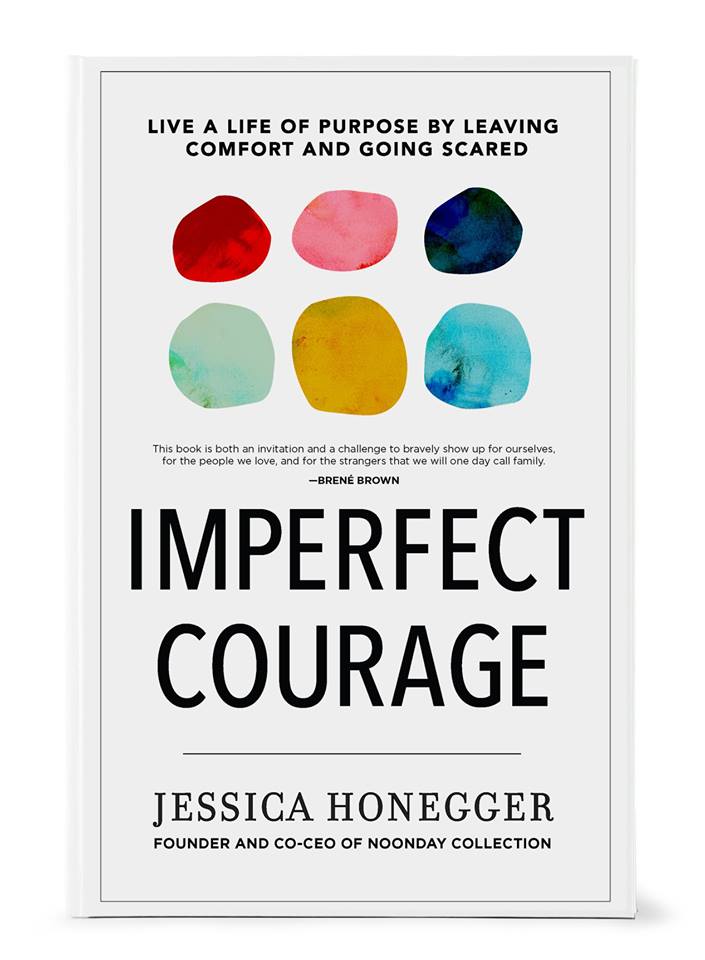
Book Review: Imperfect Courage by Jessica Honnegger of Noonday releasing August 14, 2018

I finished the book in three sittings, in less than a week, and I must say, this book is therapy for my soul as I’m potentially reinventing my life this fall. I’m predicting NY times bestseller. The author reaches us in our head, hearts, and hands, with an amazing sister-like approach, honesty, truth, and love, that moves the reader to action. I read a lot of books from well known Christians, and this by far is my favorite book in this past year or more.


I was drawn to the title....Imperfect Courage. I was intrigued by the cover. I was motivated to read this book when I read the description about Jessica invites you in to learn self compassion. and the description of promises that she would help the reader soul search and embrace her God given identity, passions, self, and expand and create a culture of collaboration, community, sisterhood, all while being set free from whatever entraps you. And she vulnerably and authentically achieves this with compassion, real life testimonies, and her own tough love honesty.


She encourages you in a therapeutic(my word) soul searching process. I read tons of women’s Christian life and inspiration books, many which are the same instruction manuals,and are easy to read and ignore, but not so with this book. Jessica is your encourager, cheerleader, role model, and shares the testimonies of others who have joined her in this journey. 


Spoiler. 
The book ends with the encouragement of being a light as bright as the noonday, and how she named the company. While the book is light on scripture, it boldly and genuinely shares an authentic faith, her connections, and the truth she shares is very biblically driven with a Christian world view. I loved it and learned so much and feel like she has helped me process and plan out my own growth mindset to face my fears with God driven imperfect courage.